
Two Teenagers, One Cockpit, and a Lesson in Community Service
May 13, 2023
2023 CalDART Statewide Exercise · Palo Alto DART
As part of a statewide CalDART (California Disaster Airlift Response Team) exercise, the Palo Alto DART chapter flew a simulated emergency airlift mission from Palo Alto to Angwin, Concord, and Watsonville, delivering mock emergency supply packages at each stop. The goal was to practice coordination between volunteer pilots, small airports, and local ground teams—testing readiness, logistics, and communication across regions.
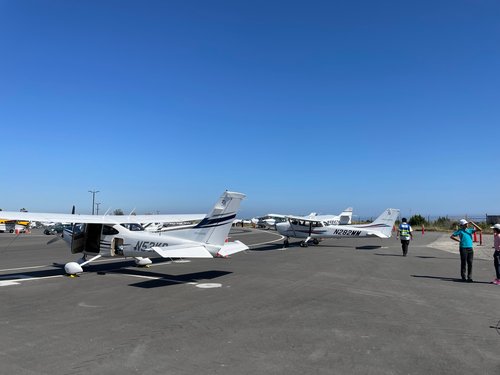
Disaster response rarely looks dramatic at the beginning. On this morning, it looked like volunteers quietly preparing airplanes, reviewing plans, and waiting for a mission to start. This mission was one of several at Palo Alto airport that day.
Small airports like Palo Alto are easy to overlook, yet in a real emergency they become flexible, accessible hubs. Their value isn’t scale—it’s readiness. When roads are damaged or congested, these airports quietly become part of the solution.
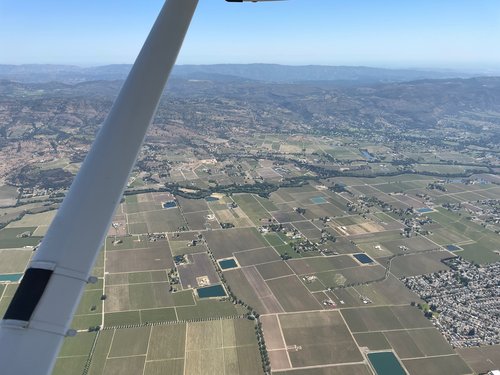
Once airborne, the mission quickly shifted from planning to practice. From the cockpit, California feels both vast and connected. Valleys, towns, and terrain pass by quickly, making it clear why aviation plays such an important role during disasters. What might take hours by road can often be reached in minutes by air—if people have practiced doing it together.
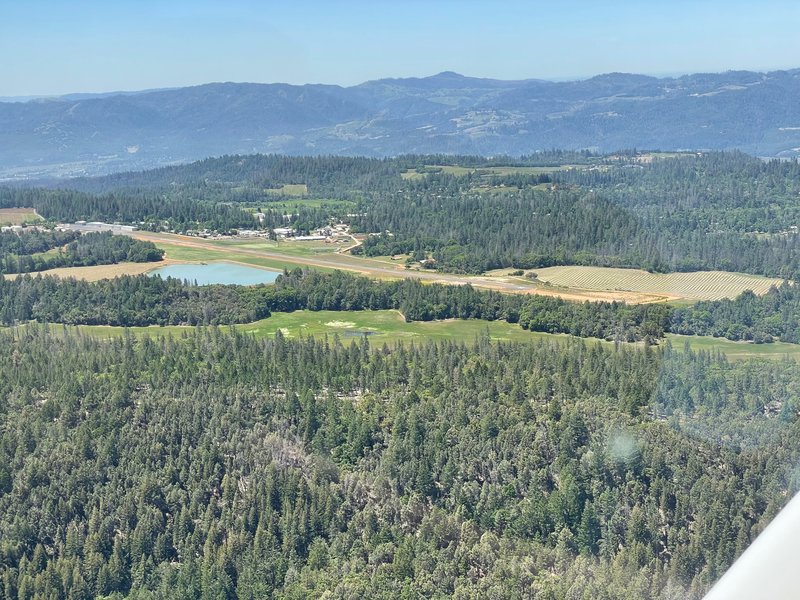
Angwin Airport sits above the Napa Valley, surrounded by terrain that can easily isolate it during fires or severe weather. Yet the runway is there—quiet, simple, and ready.
Infrastructure alone doesn’t create resilience. Prepared people do.
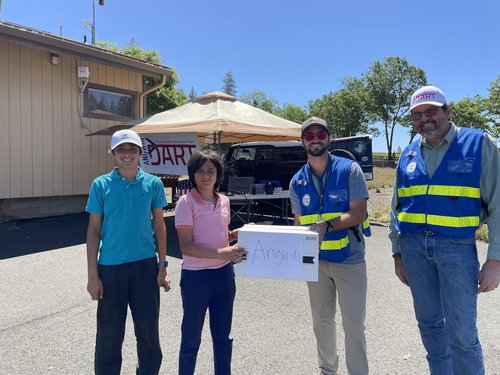
Local DART volunteers were ready on the ground, practicing exactly what they would do in a real emergency. This is how aviation turns into action—not through equipment alone, but through people meeting people.
For two teenagers on board, this was the moment when “community service” stopped being an abstract idea and became something tangible and real.
The next leg reinforced that disaster response isn’t local—it’s regional. Urban areas, suburbs, and rural communities all face different risks, but they rely on the same principle: coordination across distance. From the air, the scale of California makes that obvious.
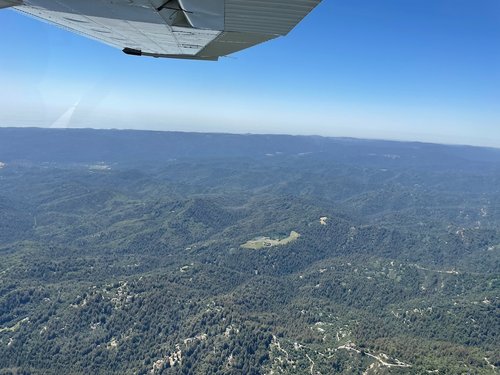
Terrain shapes what’s possible during an emergency. Mountain ranges like these can slow or sever ground access, turning routine trips into long detours.
Aviation doesn’t remove those challenges—but it changes them. Seeing this from above makes the lesson immediate, especially for younger eyes.
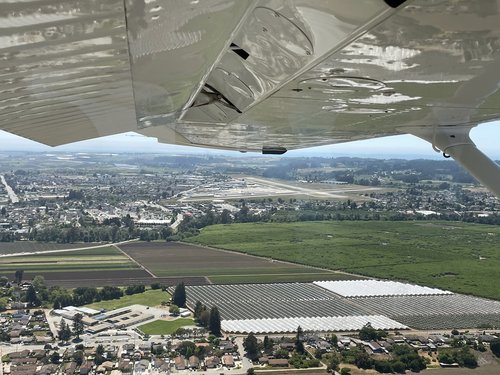
As Watsonville came into view, neighborhoods appeared below—homes, streets, and everyday life. This is who disaster response ultimately serves. Not plans or systems, but communities waiting on the other side of the runway.
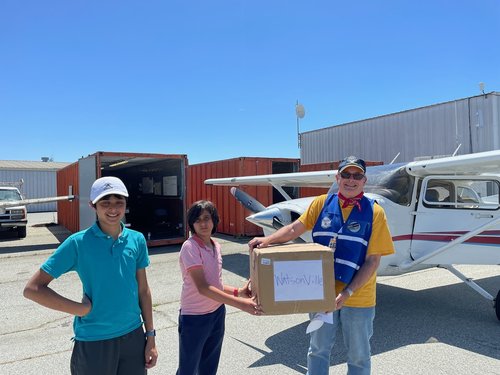
By the final stop, the routine was familiar: land, meet local volunteers, hand off supplies, move on. That repetition is intentional. It’s how volunteers become effective, and how preparation becomes confidence.
It’s also how younger participants learn that service isn’t symbolic—it’s operational.
CalDART works because of a simple equation: volunteers, small airports, and preparation. Together, they form a capability that’s easy to overlook—until it’s needed most.
Bringing teenagers into experiences like this isn’t about teaching them to fly or training them for emergencies. It’s about showing them that community service can be active, real, and shared.
If we want the next generation to step up when it matters, this is how it starts: one cockpit, a few airports, and responsibility passed forward.